Six Benefits of a Mastermind Group
Leave a reply

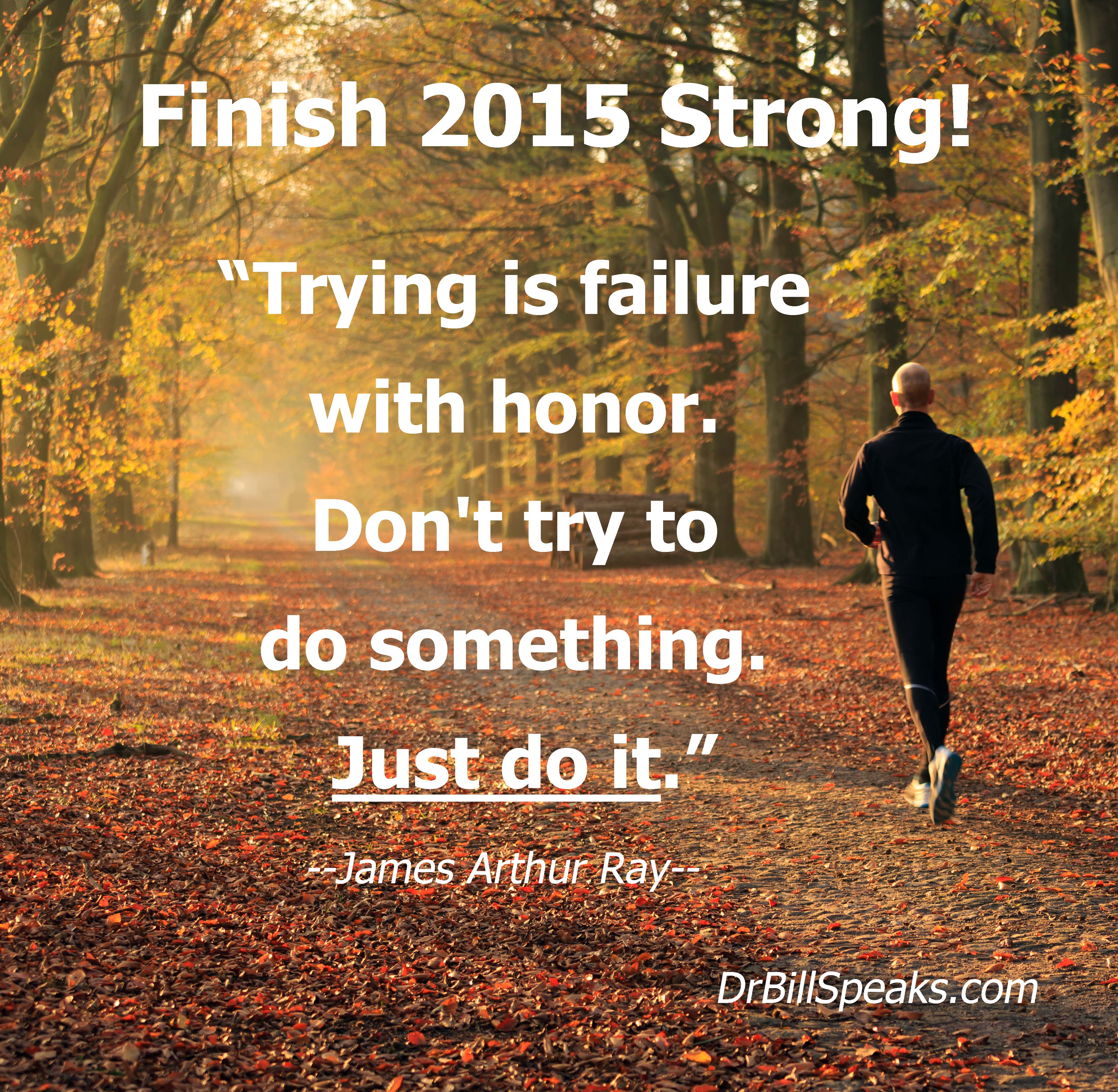
Man trail running in a autumn colored lane in the forest.

The Goal
A desk completely free of paperwork and folders has been my illusive goal for many years. While the coming of the digital age certainly helped reduce my paper load, there are always time-sensitive, physical files and supportive documents that have to be stored somewhere, at least temporarily. Scanning was a partial solution, but not a complete one.
The Challenges
This year, I finally achieved a bare desk and have kept it that way. In the past, two main hurdles seemed to stand in the way of my quest for a clean workspace:
1. Fear of Forgetting: If I didn’t keep that urgent file on my desk, I sometimes forget to address it. I suffered from the classic disorder, “out of sight, out of mind.”
2. Fear of Losing Time: If I filed the paperwork, even close by, I might not recall exactly where I put it. Each paper-bound project had its own file and in a year’s time I could have hundreds. Even if I filed things alphabetically, if I didn’t remember exactly how I labeled a file or its specific contents, I could waste time looking through scores of files.
The Breakthrough
This year I finally did it. I now maintain a paper-free desk. It is refreshing to arrive at my desk and find nothing on it. What is the payoff? I no longer feel distracted or overwhelmed. And, I can be far more creative and immediately so. Here’s what I did differently:

You have secured that initial meeting- congratulations! There is a good chance you are talking to your next client. In most cases, your host will begin with a discussion of the problem, including a bit or a lot of history. Whether you permit your prospect to take up most or all of the meeting in filling in the back story and “getting you up to speed” is beyond the scope of this article. (Hint: It isn’t a good idea.) We have all been there. That said, there are several powerful questions you can ask in a short time to help demonstrate that they are right in choosing you for the job and add value immediately.
Here are some of my favorite questions I use to get the ball rolling and to build confidence in my prospective client. You don’t need to use all of them but one or two delivered at the right time can do much to seal your working relationship. If you can immediately demonstrate that you can listen well then better describe the nature and scope of the problem than your prospect, it is a logical next step to for them to believe you also can also deliver an effective solution.
Question 1. “What concern(s) haven’t we discussed but I should be asking you about if I was smart or insightful enough?”
This inquiry gets your client thinking deeper and reflects well on your listening and probing skills. It is an excellent technique for one-on-one team member interviews where the initial responses are the safe, “party line” type but there is a more important issue that people may be avoiding.
Question 2. “What outcome would show everyone that we have ‘knocked it out of the park’ (for an event) or completely resolved this issue (for a problem or challenge)?”
This inquiry allows you to agree on the deliverable(s) ahead of time so that it is very obvious to all if things go well. It puts clients at ease knowing that you are just as concerned as they are that the money they will invest in retaining you will be worth it. No one wants to take the fall for wasting money on a useless consultant.
Question 3: “What have you been doing? What could you be doing? And, based on what we talked about so far, what do you think you will do as a first step?”
When delivering this classic multi-part question, allow ample time for reflection and response between each query. This deceptively simple question can be highly effective and, at the same time, underscores that the responsibility for the desired change ultimately lies with the client, not you.
Question 4: “How much has this problem cost you so far? What will it be like in six months if it isn’t resolved?”
This question serves both you and the client well. First it reveals the financial and emotional cost that the challenge has created to date. As a bonus, it gives you a rough sense of what your consulting solution is worth. An organization that has a six-figure problem shouldn’t expect you to be paid hourly or “cry poor.”
The bonus question below addresses the very real possibility that you are not the right fit for your prospect and, at the same time, pushes back “tire kickers” respectfully when you are being manipulated to offer a free hour of consulting or a highly detailed proposal describing your intended intervention to prove you can “deliver the goods.”
Bonus Question. “I am happy to answer more of your questions about my background but it is important for me to determine if we are the right fit. As I take on a certain number of clients each month, it’s essential to see if we would work well together. Agreed? So I would like to ask you a few questions at this point if you don’t mind….”
Don’t be shy about stopping a barrage of questions in mid-volley. Sometimes you will get the clear sense that your prospect is making the rounds with potential consultants trying to see how many free hours of advice he or she can get so the organization can then do the work internally and hire no one. Whenever I hear someone say, “We are currently interviewing a number of potential consultants,” it is time for me to qualify them with a list of questions of my own. This changes the “air in the room immediately” and I cease dancing my hardest to get the job to inviting them to join me on the stage.
Have a great consulting question of your own? Tell us about it.
_________
Dr. Bill Dyment heads Dyment & Associates, a seminar, coaching and counseling firm. Over the past 20 years, he has spoken 2,400 times to 465 organizations assisting top executives and key employees on peak team and self leadership. He is also the co-author of Fire Your Excuses.

It was my privilege to speak to Lifelines in Costa Mesa, CA recently. They were a great audience. Thanks much to host, Randy Moraitis, and his crack advance team!
By Dr. Bill Dyment, Author of Fire Your Excuses
What are the most valuable and instructive books for entrepreneurs and intrepreneurs to read in 2015?
One of the most impactful books to emerge in the last 10 years is Essentialism: The Disciplined Pursuit of Less by Greg McKeown In it, McKeown masterfully addresses the innovator’s most common challenge—maintaining strategic focus. You will find it on the 2015 list below.
Whether your are an entrepreneur who is starting or building an organization outside of the corporate walls or an intrapreneur, one who is innovating within them, you will find personal and career “gold” in many of books below. Not every book will relate to your particular situation, but in this carefully curated list from my own reading and that of many other entrepreneurs, you will find powerful classics and contemporary contributions to personal and business innovation.
The list contains the very best resources to such challenges as self-leadership, strategic positioning, marketing, branding, client acquisition and retention, and the development and launch of new products in a crowded digital marketplace.
Enjoy, comment on what books you think we missed, and then let’s get reading!
[tweetthis]The 2015 List: 50 Books Every Entrepreneur (and Intrapreneur) Should Read. https://drbillspeaks.com/?p=564[/tweetthis]
(In alphabetical order)